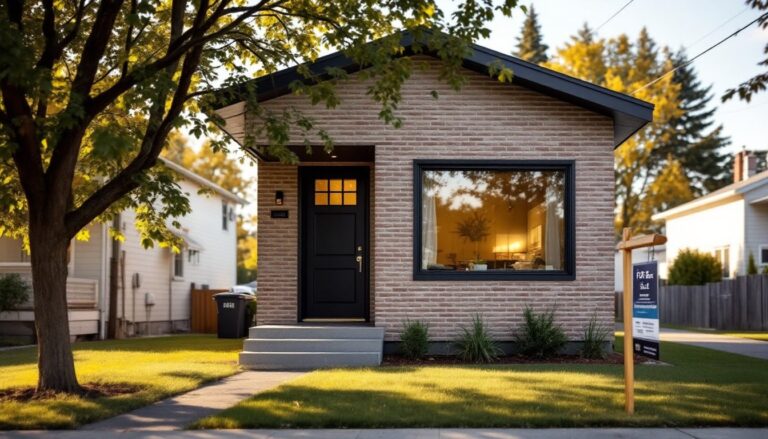

Navigating the world of home buying can feel like trying to solve a Rubik’s Cube blindfolded. One of the biggest puzzles is figuring out the minimum down payment for a conventional loan. Spoiler alert: it’s not as daunting as it sounds! Whether you’re a first-time buyer or looking to upgrade, knowing this crucial number can save you from a financial headache and maybe even a few gray hairs.
Table of Contents
ToggleUnderstanding Conventional Loans
Conventional loans represent a popular choice among homebuyers seeking financing without government backing. These loans cater to various needs, encompassing primary residences, vacation homes, and investment properties. They typically require a solid credit history and stable income for approval.
The minimum down payment for a conventional loan often varies. Most lenders ask for at least 3% of the purchase price, especially for first-time buyers. A larger down payment can yield benefits. Putting down 20% or more helps avoid private mortgage insurance (PMI), thus reducing monthly payments.
Interest rates depend on several factors. Credit scores, loan amounts, and down payment sizes influence these rates significantly. Higher credit scores can unlock lower rates, allowing borrowers to save money over time.
Debt-to-income (DTI) ratios matter when considering conventional loans. Lenders generally prefer a DTI ratio of 43% or lower, as it indicates manageable debt levels. This ratio includes all monthly debt payments in relation to gross income.
Loan limits apply to conventional loans as well, set by the Federal Housing Finance Agency (FHFA). For 2023, the conforming loan limit reached $726,200 in most areas, with limits varying in high-cost regions. Borrowers in these areas can leverage higher limits for their home purchases.
Finding the right conventional loan involves careful research. Comparing offers from different lenders ensures borrowers secure the best deals suited to their financial situations. Understanding the terms of a loan can lead to better decision-making, enabling smoother homebuying experiences.
What Is the Minimum Down Payment for a Conventional Loan?
The minimum down payment for a conventional loan typically starts at 3% for first-time buyers. Various factors influence this requirement, leading to different amounts based on individual circumstances.
Factors Influencing Down Payment Requirements
Credit scores play a significant role in determining down payment needs. Higher scores often result in lower down payment percentages, allowing buyers to secure better terms. Additionally, loan amounts influence requirements as larger loans may necessitate more substantial down payments. Lenders frequently examine debt-to-income ratios when assessing risk. A ratio below 43% is preferred, affecting the buyer’s ability to qualify for lower down payment options. Lastly, local market conditions can also affect down payments, making research essential.
Benefits of a Higher Down Payment
Opting for a larger down payment brings several benefits. Buyers who put down 20% or more avoid private mortgage insurance, potentially saving thousands in monthly costs. Greater equity in the home occurs with larger down payments, providing financial security against market fluctuations. Lower monthly mortgage payments result from reduced loan amounts, making budgeting easier. Furthermore, buyers often access more favorable loan terms and interest rates with a higher down payment, enhancing overall affordability. These factors reinforce the advantage of saving for a larger initial investment.
Different Down Payment Options
Understanding down payment options helps homebuyers prepare financially. Conventional loans provide various paths based on individual circumstances.
Standard Down Payment Amounts
Standard down payment amounts for conventional loans often start at 3%. First-time homebuyers may benefit from this lower requirement. Many buyers opt for a 5% to 20% down payment, which can reduce monthly payments significantly. A down payment of 20% helps eliminate private mortgage insurance (PMI), resulting in long-term savings. The more a buyer contributes upfront, the less they owe over the loan’s lifespan. Overall, larger down payments lead to increased equity in the home from the outset.
Low Down Payment Programs
Low down payment programs cater to buyers with limited funds available. Many lenders offer options requiring as little as 3% down. USDA and VA loans represent alternative financing solutions for eligible borrowers. These programs enable prospective homeowners to navigate the market with low upfront costs. Local and state housing agencies also provide assistance programs aimed at reducing down payment barriers. Researching local offerings can uncover valuable resources for potential buyers. In essence, utilizing low down payment programs can make homeownership more accessible for a wider audience.
Additional Costs to Consider
Homebuyers should account for additional costs beyond the down payment. Understanding these expenses ensures better financial planning throughout the homebuying process.
Private Mortgage Insurance (PMI)
Private mortgage insurance often applies when a down payment is less than 20%. This insurance protects lenders in case of default. Monthly PMI costs can range from 0.3% to 1.5% of the original loan amount. For example, on a $300,000 loan, PMI could add $90 to $450 to the monthly payment. Eliminating PMI by making a 20% down payment provides significant savings. Cancelling PMI might occur once the loan balance drops below 80% of the home’s value, making it a financial goal for many borrowers.
Closing Costs
Closing costs typically range from 2% to 5% of the purchase price. These costs include fees for appraisals, inspections, and title insurance. In addition, prepaid property taxes and homeowners insurance could arise at closing. For a $300,000 home, expect closing costs between $6,000 and $15,000. Many lenders allow for negotiations or include some costs in the overall financing. Assessing local market conditions can reveal potential for getting help with these expenses. Understanding and budgeting for closing costs provides a clearer picture of the total investment.
Understanding the minimum down payment for a conventional loan is vital for any homebuyer. It not only influences monthly payments but also affects overall financial health. By knowing the options available and the implications of different down payment amounts, buyers can make informed decisions.
Exploring local resources and assistance programs can further ease the path to homeownership. With careful planning and research, navigating the complexities of down payments becomes much more manageable. Ultimately, being proactive in this area can lead to significant savings and a more successful homebuying experience.