Dome tiny houses are reshaping how people think about minimalist living. These striking structures combine geodesic principles with compact footprints, offering something between traditional tiny homes and futuristic dwellings. A dome’s curved geometry naturally distributes structural load, meaning less material and better weather resistance, two things DIY builders and eco-conscious homeowners increasingly care about. In 2026, dome tiny houses represent more than a design trend: they’re a practical answer to housing challenges, rising land costs, and sustainability concerns. Whether you’re curious about the architecture, considering one yourself, or simply intrigued by alternative housing, understanding how dome tiny houses work and what makes them special is worth your time.
Table of Contents
ToggleKey Takeaways
- Dome tiny houses use geodesic geometry to distribute structural loads more efficiently, requiring less material while offering superior weather resistance and energy performance compared to traditional rectangular tiny homes.
- The curved design of dome tiny houses maximizes perceived interior space and natural light distribution, creating a sense of openness despite compact square footage, while also simplifying water drainage and reducing wind load stress.
- Building a dome tiny house requires precise construction skills and careful permitting research, as jurisdictions have varying code requirements; kits and professional guidance can help DIYers avoid costly mistakes during assembly.
- Cost-effective dome tiny houses typically range from $35,000 to $70,000 using a DIY kit approach, with operational savings of 10–25% on heating and cooling over decades justifying the initial investment premium.
- Dome tiny house ownership involves niche resale markets, specialist insurance considerations, and variable tax treatment by jurisdiction, making it essential to verify local regulations and deed restrictions before committing to a build.
- Sustainability is a genuine strength of dome tiny houses, as they require less lumber than rectangular homes of equal size and can approach net-zero energy with modest solar additions combined with passive design strategies.
What Are Dome Tiny Houses and Why They’re Gaining Popularity
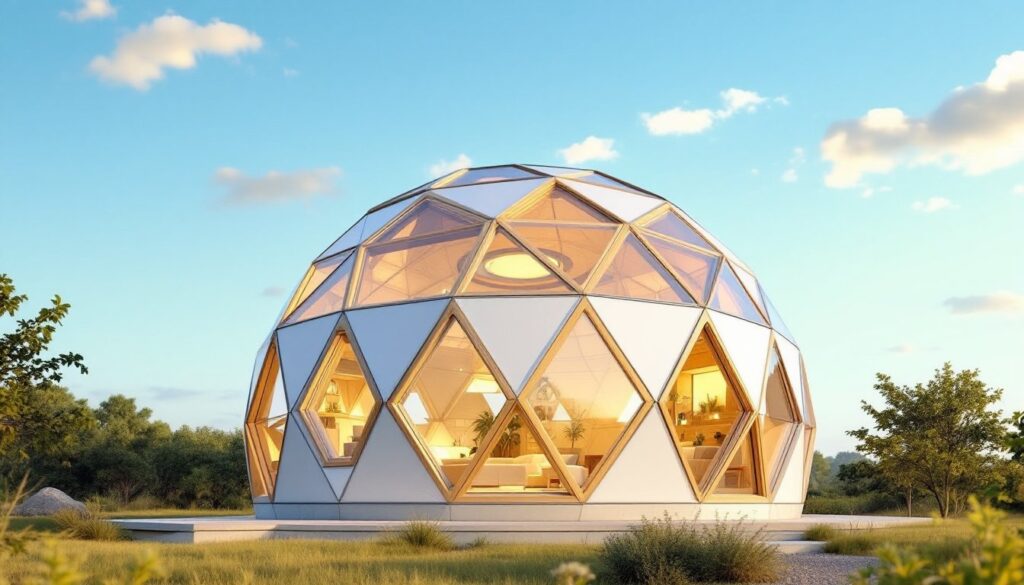
A dome tiny house is a compact dwelling built with a curved, hemispherical (or partial dome) roof structure, often using geodesic or ribbed framing. Unlike traditional rectangular tiny homes, domes maximize internal volume while minimizing wall and roof surface area. This design fundamentally changes how space feels and functions.
The appeal is practical and aesthetic. On the practical side, dome geometry means lower heating and cooling costs, the curved surface reduces air stratification, and less exterior perimeter means fewer thermal breaks. The structure sheds rain and snow efficiently, reducing drainage problems common in flat-roofed tiny homes. Wind resistance is superior too: the dome shape deflects rather than catches wind loads.
Aesthetically, occupants report a sense of openness and light even though the compact square footage. Domes read as unconventional and thoughtful, they signal intentionality in living choices. Social media and tiny home communities have amplified interest, but the real driver is performance. Homeowners building in challenging climates, heavy snow regions, hurricane zones, or high-wind areas, increasingly choose domes for structural and operational advantages.
Cost-per-square-foot tends to be competitive with traditional tiny homes when built efficiently, though custom domes can run higher. A 300-square-foot dome might start around $40,000 to $60,000 in materials and basic labor (regional variation is significant), compared to $35,000 to $55,000 for a conventional tiny home of similar size. The durability and energy performance often justify the premium over a 10 to 20-year ownership span.
Key Design Features and Architectural Benefits
Structural Integrity and Weather Resistance
Dome structures rely on compression and radial distribution rather than bending moments in beams. This is why geodesic domes, popularized by engineer Buckminster Fuller, can span large areas with minimal material. In tiny house form, a dome typically uses a frame of triangulated wood or metal struts connected at nodes, with infill panels (plywood, SIPs, or rammed earth) securing the envelope.
Wind loads are critical in structural design. A dome’s rounded profile creates less drag than a rectangular gable or saltbox. Where a conventional home experiences uplift at roof edges and corners, a dome channels wind load continuously downward. Jurisdictions in coastal or high-wind areas (NFPA and IBC standards vary by location) increasingly recognize dome designs as beneficial. Snow load shedding is natural: steep curves prevent accumulation.
Water management is straightforward. There are no interior corners or valleys where leaks initiate. A single continuous membrane or metal covering sheds precipitation efficiently. Condensation, a problem in poorly ventilated tiny homes, is less likely because the curved interior surface promotes air circulation.
Interior Space Optimization
Inside, a dome creates what designers call “usable headroom.” A traditional rectangular tiny home 300 square feet with 8-foot walls feels cramped: a 300-square-foot dome with a 15-foot apex ceiling reads much larger. You’re not gaining actual volume, but perception matters when living small.
Loft placement is intuitive in a dome. The curve naturally suggests elevated sleeping platforms along the perimeter, with living areas below. Furniture layout adapts to the circular footprint, no wasted corner dead zones. Radial storage (built-in shelving following the curve) becomes efficient and sculptural.
Natural light distribution is superior. Domes accommodate skylights or transparent dome caps at the apex, flooding the interior. Combined with curved walls, light reflects and diffuses rather than creating harsh shadows. Multiple small windows around the perimeter eliminate the “cell” feeling some tiny homes suffer.
Acoustic considerations: Curved surfaces can amplify or scatter sound unpredictably. Most owners add soft furnishings (rugs, curtains, padded furniture) strategically. Unlike a rectangular room, bass frequencies don’t accumulate in corners, which some find beneficial.
Building and Installation Considerations for DIY Enthusiasts
If you’re considering building or modifying a dome tiny house, honesty first: this is not a beginner DIY project. A geodesic dome frame requires precise angle cuts (compound miters on every strut), consistent assembly, and structural calculation. Many DIYers successfully build domes, but they typically bring construction experience or work with a kit supplier and detailed plans.
Permitting and Codes: Jurisdictions vary wildly. Some municipalities don’t have code provisions for domes and require engineer-stamped plans. Others accept them under IBC appendices or specialty structures. Before committing to design, contact your local building department. Mention “geodesic dome dwelling” and ask what documentation they require. This step saves thousands in rework.
Material Options: Kits come in wood (most common for tiny homes), metal, or hybrid frames. Wood is lighter and easier to fasten: metal is more durable but requires welding expertise. Infill panels can be plywood sheathing, structural insulated panels (SIPs, a sandwich of foam insulation between OSB), rammed earth, or even straw bale. SIPs speed assembly and improve R-value but cost more. Plan for a continuous vapor barrier and proper ventilation to avoid moisture trapped in the dome.
Foundation and Integration: Domes need solid, level foundations. A concrete slab, pier system, or conventional footing works, match your site’s soil conditions and frost depth. The dome footprint must be accurately laid out: a few inches of error multiplies around the perimeter. Consider whether you’re building on a trailer (for mobility) or fixed foundation (for permanence and cost savings). Each changes permitting, utilities, and resale options.
Tools and Assistance: You’ll need a miter saw or table saw for precise angle cuts, power drills, and basic carpentry tools. Many builders recommend a second set of hands, assembly jigs and patience help, but someone stabilizing frame sections during connection saves frustration and mistakes. Some regions have dome-building cooperatives or weekend workshops: investing in one saves learning time.
Cost, Sustainability, and Long-Term Living
Total project costs depend heavily on whether you’re purchasing a kit, hiring labor, or doing sweat equity. A complete turnkey dome (delivered, assembled, finished) runs $80,000 to $150,000+ for a 300- to 400-square-foot unit, depending on finishes and location. A DIY kit approach can cut that to $35,000 to $70,000, assuming you supply labor and have basic tools.
Material durability extends lifecycle value. A properly sealed wooden dome lasts 40+ years with maintenance. Metal frames last longer but require rust prevention. Compare this to a stick-built tiny home: with good care, both perform similarly long-term. The real advantage is operational: lower heating/cooling bills (10–25% savings are reported by owners in moderate climates) stack up over decades.
Sustainability is a genuine strength. Domes require less lumber for structural framing than rectangular homes of equal size. Combined with natural ventilation, passive solar design, and small overall footprint, a dome tiny house can approach net-zero energy with modest solar addition. Water systems and waste management are identical to other tiny homes, the dome shape doesn’t inherently help there, but minimized living space reduces consumption.
Long-term considerations: Resale can be tricky. Dome homes appeal to a niche buyer. In markets saturated with conventional tiny homes, a dome might take longer to sell or command a premium. Insurance is available but sometimes requires specialist underwriting. Homeowner associations occasionally restrict unconventional designs, so check deed restrictions before land purchase. The Tiny Home Insurance Tips resource covers policies adapted to alternative dwellings and tiny structures. Tax treatment varies by jurisdiction, consult local assessors about how domes are classified (dwelling, accessory, recreational). Some regions treat domes as personal property rather than real estate, affecting financing and taxes significantly.
For those pursuing a minimalist lifestyle with intent, dome tiny houses represent a thoughtful intersection of performance and philosophy. They’re not the cheapest entry into tiny living, but they deliver tangible comfort, durability, and distinctive character that justify consideration.
Conclusion
Dome tiny houses aren’t a gimmick, they’re a legitimate architectural solution to compact living that balances performance, aesthetics, and sustainability. If you’re drawn to alternative housing, the dome offers structural and operational advantages worth exploring. Start with permitting research and connect with existing dome dwellers or builders in your region. The learning curve is steeper than conventional tiny homes, but the payoff, a durable, efficient, distinctive home, resonates with thoughtful DIYers and intentional living advocates alike.