
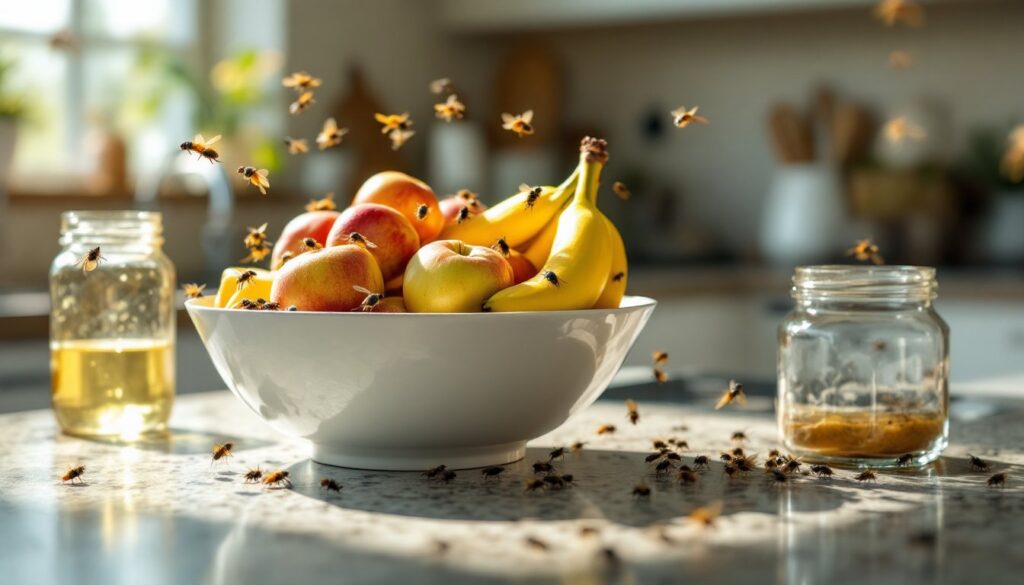
You spot them near the kitchen sink, hovering over a bowl of fruit, or crawling along the bathroom wall, tiny black bugs that seem to appear out of nowhere. Whether they’re fruit flies, fungus gnats, or something else entirely, these pests are frustrating and often harder to eliminate than they first appear. The good news: identifying what you’re dealing with and taking targeted action can eliminate the problem quickly. This guide walks you through the most common household invaders, why they’re attracted to your home, and proven DIY methods to get rid of them for good.
Table of Contents
ToggleKey Takeaways
- Tiny black bugs in your house are most commonly fruit flies or fungus gnats, which can be identified by their appearance and breeding preferences—fruit flies gather near food and drains, while fungus gnats congregate near overwatered houseplants.
- Use an apple cider vinegar and dish soap trap to confirm you’re dealing with fruit flies, and address the root cause by eliminating food sources and breeding sites, not just killing visible adults.
- For fungus gnats, the key is drying out soil by watering only when the top 2 inches feel dry, improving air circulation with fans, and using sticky traps to reduce the population.
- Drain flies require thorough drain cleaning using enzyme-based cleaners followed by boiling water, while pavement ants can be controlled by sealing entry points and disrupting pheromone trails with vinegar.
- Prevent future infestations by storing produce properly, maintaining dry conditions with exhaust fans, cleaning drains weekly with boiling water, sealing cracks around windows and doors, and disposing of waste promptly.
Common Tiny Black Bugs Found Indoors
Identifying Fruit Flies and Fungus Gnats
The two most common culprits are fruit flies and fungus gnats, and they’re easy to confuse because they look similar and both measure roughly 1/8 inch long. Here’s how to tell them apart.
Fruit flies have a tan or brownish body with distinctive red or dark eyes. They’re attracted to fermenting foods, overripe fruit, vegetable scraps, wine, beer, and drains. Fruit flies are fast reproducers: a female can lay up to 500 eggs, and a generation completes in 8–10 days. If you see them swarming around your fruit bowl or near trash, you’ve likely got a fruit fly problem.
Fungus gnats are darker, almost black, with long legs and segmented bodies. They breed in moist soil and love houseplants, especially ones that are overwatered. Fungus gnats feed on fungi in the soil, not on food scraps, so they congregate near potted plants rather than the kitchen. Their life cycle is also faster, sometimes just 4–5 days, making them prolific if moisture stays high.
To confirm which pest you’re dealing with, place a small dish of apple cider vinegar mixed with a drop of dish soap near the suspected source. Fruit flies will jump into it within a few hours: fungus gnats usually won’t. This test also serves as a mini trap.
Other Common Household Black Bugs
Beyond fruit flies and fungus gnats, homeowners occasionally encounter other tiny black bugs. Pavement ants are small (1/8 inch), jet-black, and commonly nest outdoors but forage indoors for food and water. They trail in lines and can be persistent if they find a food source. Unlike fruit flies, they’re slow-moving and organized. Professional pest control guidance suggests how the pros get rid of ants indoors through baiting and exclusion tactics.
Drain flies (also called moth flies) are fuzzy, moth-like insects that breed in sink and shower drains where biofilm accumulates. They’re grayish-brown or black and about 1/8 inch long. If they’re coming from drains, they won’t respond to fruit traps, you’ll need to clean the drain pipe itself.
Each of these bugs requires a different treatment approach, so correct identification is your first step toward elimination.
Why These Bugs Are Invading Your Home
Tiny black bugs don’t appear randomly: they’re responding to conditions in your home that make it hospitable.
Moisture and organic matter are the primary attractants. Fruit flies need a food source and fermentation: a single overripe banana or forgotten juice glass can sustain a population. Fungus gnats seek consistently wet soil, a sign you’re watering houseplants too frequently or that pots lack proper drainage. Drain flies thrive in the gunk accumulating in pipes where soap scum, hair, and food particles create a breeding ground.
Poor ventilation and high humidity accelerate reproduction, especially in kitchens and bathrooms. These insects develop faster in warm, humid conditions. If your home tends toward dampness or you have areas with stagnant air, you’re creating ideal conditions.
Unsealed entry points allow outdoor pests to wander inside. Small gaps around windows, doors, or utility lines are common routes. Pavement ants and other outdoor pests slip in searching for water or food during dry spells.
Inconsistent cleaning habits mean food debris accumulates in hard-to-see places, under the toaster, behind the refrigerator, in garbage disposal lines. Flies find these spots before you do.
Understanding the source is critical. If you kill adult flies but don’t remove the breeding site, new adults will emerge within days, restarting the cycle. Successful elimination requires a two-pronged approach: eliminate the food or moisture source and kill existing adults.
DIY Methods to Eliminate Tiny Black Bugs
Natural and Non-Toxic Solutions
For fruit flies, start by removing the food source. Discard overripe fruit, empty trash, and clean drains thoroughly. Drain cleaning is non-negotiable, pour boiling water down kitchen drains, then follow with a mixture of 1/2 cup baking soda and 1/2 cup white vinegar. Let it fizz for 15–20 minutes, then flush with hot water. Repeat every few days for two weeks.
Next, set traps. Fill a small container with apple cider vinegar, add a drop of dish soap, and cover it loosely with plastic wrap. Poke tiny holes in the wrap. Fruit flies smell the vinegar, enter through the holes, and drown because the soap breaks the surface tension. Replace the trap every 2–3 days. Alternatively, a simple wine bottle with a bit of red wine and dish soap, covered with a paper cone, works well, flies enter but can’t escape.
You can also use gnat traps or sticky traps near the source. These are inexpensive, non-toxic, and effective at reducing the population while you eliminate breeding sites.
For fungus gnats, the priority is drying out the soil. Stop watering on a regular schedule: instead, check soil moisture 2 inches down with your finger. Water only when that layer feels dry. Elevate pots to improve air circulation and place a fan near groupings of plants to increase air movement. If the infestation is severe, repot the plant with fresh, sterile potting soil, the old soil likely contains larvae.
You can top-dress with a 1/2-inch layer of sand or perlite to create a dry barrier that makes it harder for gnats to lay eggs. Sticky traps placed in pots catch adults. This approach takes patience, fungus gnats can linger 3–4 weeks even after moisture is controlled because pupae in the soil remain dormant.
For drain flies, a thorough drain cleaning is essential. A combination of enzyme-based drain cleaners (which digest biofilm without harsh chemicals) followed by boiling water is often effective. If the problem persists, you may need to remove and clean the drain trap or call a plumber. DIY drain snakes can help clear stubborn blockages, though for tricky situations, professionals have better tools and access.
For pavement ants, locate the entry point and seal it with caulk. Wipe down trails with a vinegar-and-water solution (1:1 ratio) to disrupt their pheromone paths. Set bait stations, small containers filled with a mixture of seasonal repair guides and often provide practical placement tips. Ants carry the bait back to the nest, eventually killing the colony. This takes time (1–3 weeks) but works better than spray, which kills scouts without addressing the source.
General tactics that work across all types include improving sanitation, sealing entry points, and maintaining proper humidity (around 40–50%). A dehumidifier in damp basements or bathrooms is a worthwhile investment and prevents future problems beyond just pest control.
When to call a pro: If an infestation spreads even though two weeks of consistent effort, or if you suspect a drain line issue, contact a licensed pest control operator or plumber. Some problems require professional-grade treatment or equipment that DIY methods can’t match.
Preventing Future Infestations
Once you’ve eliminated the current infestation, prevention keeps them from returning.
Store produce properly. Refrigerate ripe or overripe fruit immediately. Keep the fruit bowl well-stocked with fresh fruit and rotate it regularly, stagnant fruit is a beacon for flies. Don’t store bananas in a closed paper bag: that traps ethylene gas, which speeds ripening and fermentation.
Manage moisture rigorously. Check houseplant soil before watering each time. Empty saucers under pots within an hour of watering: standing water is a nursery. Fix leaky faucets and pipes, a dripping sink doesn’t just waste water: it creates a humid microclimate. Use exhaust fans in bathrooms and kitchens: run them during and for 20 minutes after showers or cooking.
Maintain clean drains. Pour boiling water down drains weekly and use the baking soda-vinegar flush monthly. Keep drain strainers clean and don’t let hair or debris accumulate. This simple habit stops drain flies before they start.
Seal entry points. Caulk gaps around windows, doors, and utility penetrations. Screen vents and ensure door seals are tight. Comprehensive home maintenance checklists outline seasonal opportunities to inspect and seal gaps.
Dispose of waste promptly. Take out trash regularly, especially food waste. Don’t let compost bins sit indoors without a tight lid. Rinse cans and bottles before recycling to remove food residue.
Improve ventilation and air flow. Stagnant air allows humid pockets to form. Ceiling fans, box fans, and open windows (when weather permits) all help. Good air circulation makes homes less attractive to moisture-loving insects.
Prevention takes consistency, but it’s far easier than dealing with an active infestation. Most homeowners who maintain these habits rarely see a repeat problem.