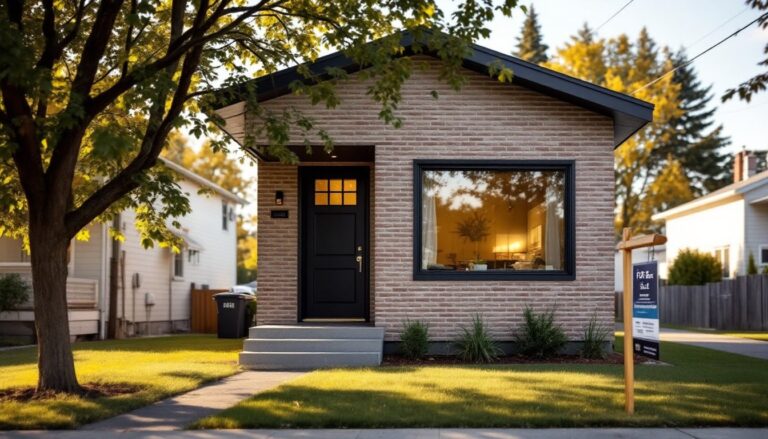

Buying a house is like dating: it starts with a spark and ends with a commitment. But before you can say “I do” to your dream home, there’s that pesky down payment staring you down. It’s the financial equivalent of showing up to a first date with a dozen roses—essential, but also a little intimidating.
Table of Contents
ToggleUnderstanding Down Payment On A House
A down payment represents a portion of the home purchase price paid upfront. Typically, a larger down payment can reduce monthly mortgage payments and lessen overall loan costs. Homebuyers commonly aim for 20 percent of the purchase price to avoid private mortgage insurance (PMI). This insurance adds an additional monthly charge, impacting budget plans.
Various programs assist buyers in managing down payment requirements. For instance, first-time homebuyer programs often allow lower down payments, sometimes as low as 3 percent. These options cater to those who may struggle with significant upfront costs.
Calculating the ideal down payment involves assessing personal finances. Buyers should evaluate savings, income stability, and future financial goals. It’s wise to consider all costs associated with home buying, including closing costs, inspections, and maintenance.
Financing options offer flexibility depending on down payment size. A conventional loan typically favors buyers with substantial down payments, while government-backed loans, like FHA or VA loans, accommodate those with smaller initial payments. Understanding these distinctions aids in choosing the right mortgage type.
Ultimately, the down payment serves as a significant factor influencing loan approval and mortgage terms. A strategic approach to the down payment can empower buyers, encouraging informed decision-making while navigating the home-buying process.
Importance Of A Down Payment
A down payment plays a crucial role in the home-buying process. It not only represents the buyer’s commitment but influences long-term financial aspects of homeownership.
Building Home Equity
Building home equity begins with a down payment. When a buyer pays this upfront amount, they immediately own a portion of the property. Increased home equity occurs as property value rises. Each mortgage payment contributes to building equity by reducing the loan balance. Homeowners with substantial equity enjoy benefits during refinancing, home equity loans, or selling their property.
Reducing Monthly Payments
Reducing monthly payments directly relates to the size of the down payment. A larger down payment lowers the total loan amount, which decreases monthly mortgage obligations. Homebuyers often aim for a 20 percent down payment to avoid private mortgage insurance costs. Even smaller down payments provide an advantage by yielding lower monthly totals than high-risk loans. The need for responsible payment planning becomes essential, especially for first-time buyers who want manageable expenses.
Factors Influencing Down Payment Amount
Several factors impact the size of a down payment for a home. Understanding these influences helps buyers make informed choices.
Home Price Considerations
Home price plays a key role in determining the down payment amount. Higher-priced homes typically require larger down payments to secure favorable mortgage terms. For instance, a home costing $300,000 often expects a 20 percent down payment of $60,000, while a $150,000 home requires $30,000 at the same percentage. Buyers may also consider local market conditions, as prices can fluctuate significantly. An understanding of neighborhood values helps buyers set realistic expectations. Buyers seeking lower monthly payments may opt for larger down payments regardless of the home’s price.
Loan Type Variations
Different loan types influence the down payment required. Conventional loans usually favor down payments of at least 20 percent, promoting better interest rates and avoiding private mortgage insurance. Conversely, government-backed loans like FHA or VA loans allow for smaller down payments, sometimes as low as 3 percent, appealing to first-time buyers. These options make homeownership more accessible. Each loan type caters to varying financial situations and needs, ensuring that buyers can find an option that suits their circumstances. Ultimately, selecting the right loan type significantly impacts both the down payment and future financial obligations.
Strategies For Saving A Down Payment
Saving for a down payment requires thoughtful planning and commitment. Implementing a few effective strategies can make this financial goal more achievable.
Setting Up A Budget
Creating a budget helps track income and expenses. Prioritizing savings is essential; allocate a specific percentage of each paycheck toward the down payment. Reducing discretionary spending, such as dining out, can significantly increase savings. Utilizing apps or tools, like spreadsheets, aids in monitoring financial progress. Regularly reviewing the budget ensures it remains realistic and adaptable. Establishing an emergency fund protects against unexpected expenses, allowing the down payment savings to stay on track. Ultimately, budgeting creates discipline, essential for meeting the down payment target.
Exploring Assistance Programs
Numerous assistance programs exist to support homebuyers. State and local governments often provide grants or loans aimed at first-time buyers. Programs like FHA loans allow lower down payments, sometimes as low as 3 percent. Priority often goes to those with lower income levels, providing additional benefits or reduced fees. Researching available options ensures buyers make informed decisions about which program suits their needs. Consulting with a mortgage advisor can clarify eligibility criteria for various assistance programs. Leveraging these resources can expedite the path to homeownership and reduce financial burdens.
Common Myths About Down Payments
Homebuyers often believe that a 20 percent down payment is necessary for purchasing a house. Many lenders advertise this figure, leading to misconceptions about affordability. Smaller down payments, sometimes as low as 3 percent, are available through various programs, especially for first-time buyers.
Some think they need perfect credit to qualify for a mortgage. In reality, many lenders offer options for borrowers with less-than-excellent credit, particularly with government-backed loans like FHA or VA loans.
Another prevalent myth is that saving for a down payment must take years. Committing to a budget and prioritizing savings can help even those with limited incomes accumulate funds more quickly for their down payment.
Buyers may also think that a down payment guarantees loan approval. However, lenders consider various factors, such as income, debt-to-income ratio, and credit history, in their decisions.
Many assume that mortgage insurance applies only if the down payment is less than 20 percent. In fact, private mortgage insurance (PMI) typically applies to conventional loans with down payments below this threshold, influencing monthly costs for buyers.
Additionally, some homebuyers believe they can’t access assistance programs for down payments due to their income level. Several programs cater to various income brackets, ensuring support is available for many potential homeowners.
Additionally, there’s a notion that saving for a down payment should solely rely on traditional savings accounts. Utilizing high-yield savings accounts or investment options can maximize savings growth, offering more choices for aspiring buyers.
Understanding these myths can empower homebuyers to navigate the down payment process more effectively, unlocking the door to homeownership.
Navigating the down payment process is a critical step for aspiring homeowners. By understanding the various options and strategies available, buyers can make informed decisions that align with their financial goals.
Whether aiming for a traditional 20 percent or exploring lower down payment options, it’s essential to assess personal finances and market conditions. Utilizing assistance programs and budgeting effectively can significantly ease the path to homeownership.
With the right knowledge and planning, potential buyers can confidently approach the home-buying journey and unlock the door to their new home.