A farmhouse tiny house blends the warmth of rural aesthetics with smart, compact living. Whether you’re retrofitting a converted barn, building from scratch, or just redesigning an existing small space, the farmhouse style brings timeless appeal without waste. Think exposed beams, shiplap walls, vintage hardware, and a color palette that whispers comfort rather than shouts trendy. The beauty of this approach is that it works beautifully in tight quarters, in fact, constrained space often forces the best design decisions. This guide walks you through the core principles, practical elements, and honest shortcuts that make farmhouse tiny houses both livable and genuinely lovely.
Table of Contents
ToggleKey Takeaways
- A farmhouse tiny house blends rural authenticity with compact living by emphasizing honest materials like real wood, reclaimed barn siding, and galvanized metal in spaces under 400 square feet.
- Neutral color palettes (creams, soft grays, whites) combined with matte finishes and quality hardware create warmth without the clutter of minimalist austerity in tiny spaces.
- Vertical storage solutions, including floor-to-ceiling shelving and wall-mounted cabinets, are essential to preventing visual clutter while maintaining the farmhouse aesthetic.
- Each piece of furniture in a farmhouse tiny house must serve dual purposes—a table with drawers, a bed frame with under-bed storage—to maximize function in limited square footage.
- Lighting strategy matters more in small spaces; use layered ambient and task lighting with warm-white bulbs (2700K) to create intentional ambiance instead of relying on harsh overhead fixtures.
- Decor items should earn their place by serving function, holding memory, or delighting the eye, allowing a farmhouse tiny house to feel gathered and intentional rather than cramped.
What Defines a Farmhouse Tiny House Style
Farmhouse design draws from rural heritage, sturdy, functional, and built to last. A farmhouse tiny house takes that DNA and applies it to spaces under 400 square feet. The style emphasizes honest materials: real wood (not veneer), galvanized metal, reclaimed barn siding, and natural textiles. You’ll see a bias toward neutral tones, creams, soft grays, whites, and warm browns, anchored by darker accents in hardware or trim.
What sets farmhouse apart from other tiny-living styles is its rejection of minimalist austerity. Rather than empty, spare rooms, farmhouse tiny houses feel gathered and curated. Items serve function and beauty: a vintage milk can becomes a vase, open shelving holds both practical dishware and a few sentimental pieces. The style says, “Small doesn’t mean cold.”
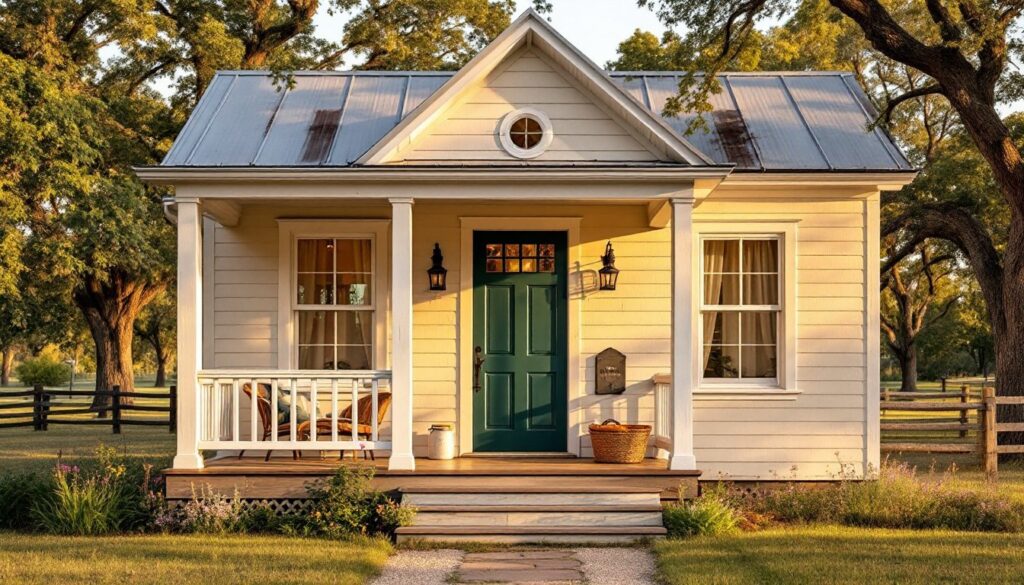
Key markers include porch living (even a 4×8 covered stoop counts), white or muted exterior trim, a pitched roof, and an emphasis on natural light through larger windows. The floor plan tends toward open-concept living, with one or two defined sleeping areas, because farmhouses were built around gathering spaces. This layout naturally suits tiny homes, turning limitation into authenticity.
You’ll recognize farmhouse tiny homes in restoration projects that preserve original features, a 1880s homestead cottage with a salvaged stone chimney, or a converted rural outbuilding. New-build tiny houses in this style mimic those qualities: hand-finished wood, simple joinery, and details that look earned rather than applied. Craftsman Tiny Homes share this honest-materials ethos, though they lean slightly more toward Arts-and-Crafts details than pure farmhouse simplicity.
Essential Design Elements for Farmhouse Tiny Homes
Color Palettes and Materials
Start with your walls. Shiplap or horizontal board-and-batten siding is the farmhouse shorthand, and it works in tiny spaces because the rhythm of boards draws the eye upward, making 8-foot ceilings feel taller. If shiplap isn’t feasible (budget, rental restrictions), paint standard drywall in soft white or warm greige (a gray-beige hybrid), which reflects light without feeling clinical.
Accent colors arrive through trim, doors, and textiles rather than painted feature walls. A matte black interior door frame, a deep forest green exterior, or soft sage on a kitchen island provide quiet richness. Avoid high-gloss finishes in small spaces: satin or matte finishes absorb light better and feel less harsh.
Materials are where the style lives. Real hardwood flooring, or convincing engineered wood in wide planks (5 inches or wider reads larger than narrow boards), anchors the space. Avoid laminate: it dates fast and can’t handle the character a farmhouse demands. Reclaimed wood for shelving, mantels, or accent walls is pricey but transformative: new wood stained to look aged works if budget is tight. Metal hardware should feel substantial: wrought iron, antique brass, or blackened steel, not shiny chrome. A salvage yard visit often yields authentic handles, hinges, and fixtures for half the price of new reproduction pieces.
Countertops in a farmhouse tiny kitchen work best in solid wood (needs sealing, demands upkeep, but looks authentic) or white subway tile with grout in a matching or slightly darker shade. Concrete is increasingly farmhouse-approved and hugely practical in small spaces, it’s durable, affordable, and can be tinted warm or cool to match your palette.
Furniture and Layout Strategies
Tiny farmhouse spaces demand restraint. Each piece must pull weight: a table with drawers, a bed frame with under-bed storage, a cabinet that’s also a room divider. Upholstered pieces in natural linen, cotton twill, or vintage-style fabrics (think grain-sack prints) soften the hard lines of compact layouts.
Floor plans should prioritize sight lines. An open kitchen-dining-living zone prevents the space from feeling choppy, and a single focal point, a fireplace, a statement wall, or a large window, anchors the room psychologically. Avoid floating furniture: in tiny spaces, pieces pulled away from walls actually make the room feel smaller. Push the sofa against a wall, tuck the dining table into a corner nook.
Vertical storage is non-negotiable. Floor-to-ceiling shelving on one wall costs less than the square footage it frees on the ground. Ladder shelves, pegboards painted white or natural wood, and shallow wall-mounted cabinets in the entryway capture clutter before it spreads. The rule: if something sits on a surface, it steals visual space and draws dust. Tiny Home Storage Secrets break down built-in strategies that feel intentional rather than crammed.
Color in furnishings stays muted. A cream linen sofa, a white painted farmhouse table, natural wood accent chairs. Pops of color come from textiles, a burnt-orange throw, a navy and cream quilt, that can be swapped seasonally without structural changes.
Interior Decor Tips for Maximum Impact
Decor in a farmhouse tiny house isn’t about quantity. A single large piece, a reclaimed wood mirror with an ornate frame, a vintage rolling ladder, a substantial wooden shelf unit, makes more impact than a scatter of small items. This approach respects both the style and your square footage.
Textiles do heavy lifting. A chunky-knit throw blanket over a sofa edge, linen curtains that puddle slightly on the floor, a ticking-stripe runner rug, these feel farmhouse-authentic and warm the space without furniture. Curtains themselves should be generous in width (even on small windows, fuller panels look intentional) and hung high to elongate walls. Sheer or lightweight cotton in cream or white filters light beautifully in tiny rooms.
Lighting is critical in compact spaces. Overhead fixtures should be minimal: instead, use a mix of task lighting (a swing-arm wall lamp by the reading chair, pendant lights over the kitchen sink) and ambient warmth from Edison-style bulbs or warm-white LED equivalents (2700K color temperature). Avoid harsh overhead ceiling lights unless absolutely necessary for safety. Dimmable switches on all fixtures let you adjust ambiance without installing new wiring.
Decorative objects should earn their place. An antique wooden ladder leans in a corner (functional for high shelves, beautiful to look at), a chunky ceramic pitcher holds dried wildflowers, a stack of vintage ironstone sits visible on open shelves. Every item visible in a 400-square-foot home either serves function, holds memory, or delights the eye, preferably all three. This isn’t minimalism, but it’s intentional.
Wall art and accessories in farmhouse spaces favor simplicity: a gallery of black-and-white farm photography in matching frames, a large single painting in a wood-trim frame, or a collection of antique botanical prints. Avoid busy, multi-color artwork in small spaces: it fragments visual attention. Resources like Southern Living showcase how subtle decor choices create farmhouse rooms that breathe, not clutter.
Practical Storage Solutions and Space-Saving Ideas
Storage in a farmhouse tiny house must look good because it’s always visible. Built-in shelving with white-painted wood or stained open shelves feels authentic and adjustable. Install shelves 12 to 16 inches deep in hallways or above appliances, this depth avoids that cluttered, cave-like feel of deep cabinets. Use vertical space aggressively: a tall, narrow bookcase in a corner, shelving that reaches the 8 or 9-foot ceiling mark, wall-mounted baskets for textiles.
Bedrooms in tiny farmhouses often double as storage rooms. Under-bed drawers (roll-out bins in natural wood or woven wicker) store off-season clothing or extra linens. A bed frame with built-in shelving on one side creates a headboard-meets-dresser. Vintage wooden trunks at the foot of the bed combine seating, storage, and period-correct aesthetic.
Kitchen storage demands creativity. Open shelving holds daily dishes and looks farmhouse-authentic. Install a narrow pantry cabinet (just 9 or 10 inches deep) in a dead corner. Use the space above upper cabinets for cookbooks or decorative baskets. A rolling cart tucked beside the refrigerator adds counter space when needed, tucks away when cooking’s done. Label containers clearly: in tiny spaces, invisible storage breeds chaos.
Entryway storage prevents clutter from spreading inward. A low bench with cubbies or woven baskets captures coats, shoes, and bags before they land on furniture. A narrow wall-mounted coat rack and shelf keep gear off the floor. This transition zone, small as it may be, guards the rest of your home.
Clothes storage in a bedroom smaller than 100 square feet requires brutal honesty. A single closet rail, perhaps supplemented by a standing wardrobe (an armoire or tall cabinet) handles the load if you edit ruthlessly. Fold and shelf-stack rather than hang everything: a modest wardrobe in a farmhouse style, neutral tones, quality basics, a few well-chosen patterns, takes less space and photographs better in a tiny home tour. Before purchasing storage furniture, measure doorways and the path from entry: in a real tiny house, that beautiful vintage dresser won’t fit through the bedroom door.
Consider how Tiny Homes with Land often shift overflow storage outdoors, a potting shed, a covered lean-to, or a salvage-yard utility shed becomes a laundry or workshop, freeing interior square footage for living. This works especially well for farmhouse tiny homes that sit on acreage: the small house remains uncluttered, and you’ve expanded without expanding indoors. For urban or subdivision placements, resign yourself to editing inventory hard and parking seasonal items off-site if needed.
Conclusion
A farmhouse tiny house works because the style’s roots run deep in rural, functional living. Honest materials, restrained color, intentional storage, and a bias toward gathering spaces transform limited square footage into a home that feels abundant, not cramped. Tiny House Tax Info and Tiny Home Insurance Tips cover the financial side: this guide covers the soul of the space. Start with one room, refine your palette, invest in real wood and metal where it shows, and let the style emerge naturally. A farmhouse tiny house isn’t a trend to chase, it’s a way of building that respects both limitation and beauty.